


Rentdigi: Renting in Montreal 2026: Prices, Neighbourhoods & Tenant Rules
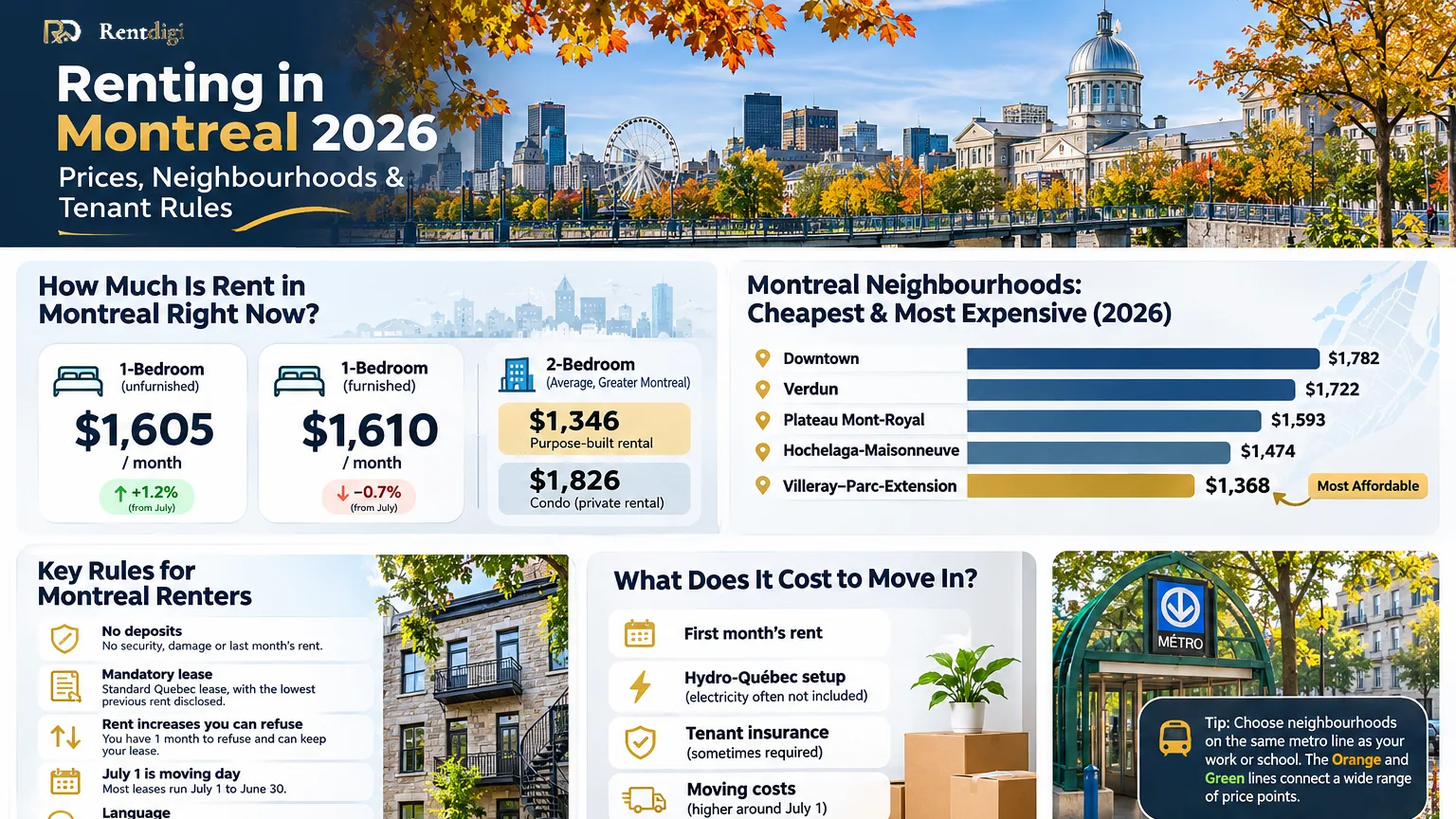
Table of Contents
- 1. How much is rent in Montreal right now?
- 2. Which Montreal neighbourhoods are cheapest and most expensive?
- 3. What rules should Montreal renters know?
- 4. No deposits of any kind
- 5. The mandatory lease
- 6. Rent increases you can refuse
- 7. July 1 is still moving day
- 8. Language
- 9. What does it cost to move in?
- 10. FAQ
- 11. What is the average rent in Montreal in 2026?
- 12. Can a Montreal landlord ask for a deposit?
- 13. Can I refuse a rent increase in Montreal?
- 14. When is the best time to rent in Montreal?
- 15. Find your place with confidence
Montreal is still the most affordable big-city rental market in Canada. An unfurnished one-bedroom asked about $1,605 a month in August 2026, according to liv.rent's Montreal rent report, and prices are below where they were a year ago. Quebec also has some of the strongest tenant protections in the country: landlords can't take a deposit, and you can refuse a rent increase without losing your home.
How much is rent in Montreal right now?
According to liv.rent's August 2026 report, the average unfurnished one-bedroom rose 1.2% from July to $1,605, while the furnished average eased to $1,610. Earlier in the year, the June report showed the citywide one-bedroom average at $1,599, about $89 lower than in June 2025.
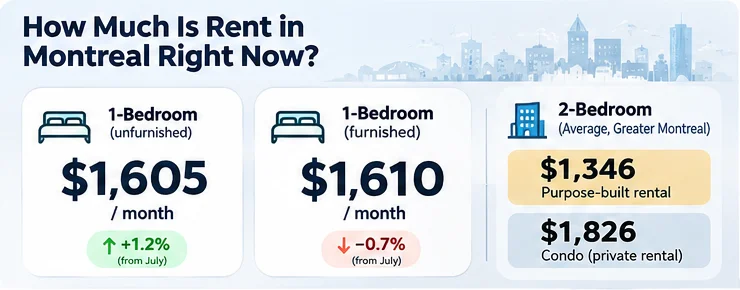
Purpose-built rentals are cheaper again. Canada Mortgage and Housing Corporation (CMHC) data shows two-bedroom purpose-built units across Greater Montreal averaging $1,346 a month, compared with $1,826 for two-bedroom condos rented privately.
That gap matters. Many long-standing tenants in older buildings pay far less than current asking rents, which is why you'll see such a wide range in listings.
For comparison, Montreal one-bedrooms remain well under what you'd pay in Toronto or Vancouver.
Which Montreal neighbourhoods are cheapest and most expensive?
Based on liv.rent's 2026 neighbourhood data:
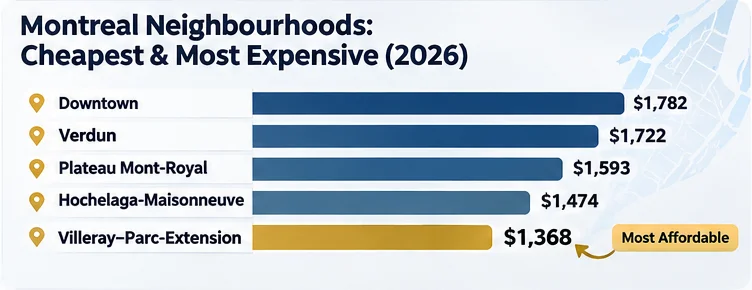
- Downtown remains the priciest area for unfurnished one-bedrooms, though it fell 6.8% year over year to $1,782 in July.
- Verdun has been closing the gap with Downtown, with only about $60 separating the two by mid-year. Waterfront access and the metro line keep demand steady.
- Villeray–Parc-Extension was the most affordable neighbourhood in August at $1,368.
- Hochelaga-Maisonneuve was the only neighbourhood where unfurnished rents rose year over year in August, a sign of growing demand on the east side.
- Plateau Mont-Royal posted one of the larger gains in the first half of the year, reflecting its enduring popularity.
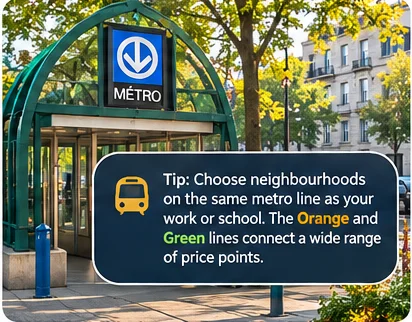
A practical approach: pick two or three neighbourhoods on the same metro line as your work or school, then compare. The Orange and Green lines connect a wide spread of price points.
What rules should Montreal renters know?
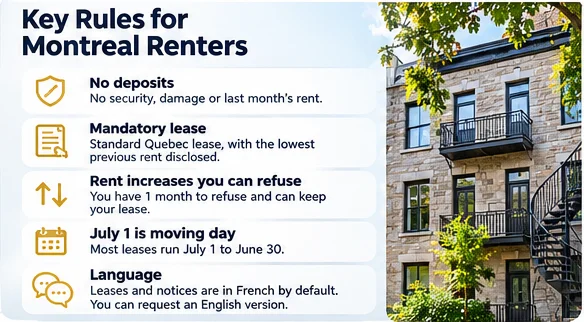
No deposits of any kind
Quebec law doesn't allow landlords to collect a security deposit, damage deposit, key deposit or last month's rent. They can ask for the first month's rent in advance, and that's it. A request for anything more is a red flag, and sometimes a sign of a rental scam.
The mandatory lease
Quebec requires a standard lease form, and the landlord must give you a copy. It includes a section where the landlord should declare the lowest rent paid in the previous 12 months. If your rent is significantly higher than what the last tenant paid, you can ask the Tribunal administratif du logement (TAL) to review it within a set window after signing.
Rent increases you can refuse
Quebec has no hard rent cap. Since January 2026 the TAL uses a new calculation method, with a 3.1% base percentage for leases renewing between April 2, 2026 and April 1, 2027. You can refuse a proposed increase within one month of receiving notice and keep your lease. The landlord then has to apply to the TAL to set the rent. Our province-by-province rent increase guide explains the rules elsewhere.
July 1 is still moving day
Most Montreal leases still run July 1 to June 30. That means the busiest search period is spring, and the selection in fall and winter is smaller but less competitive. If you're moving off-cycle, you may find landlords more willing to negotiate.
Language
Leases, notices and most official documents are in French by default. You're entitled to request the lease in English, and the TAL provides information in both languages.
What does it cost to move in?
Because there's no deposit, the upfront cost in Montreal is lower than most Canadian cities. Budget for:
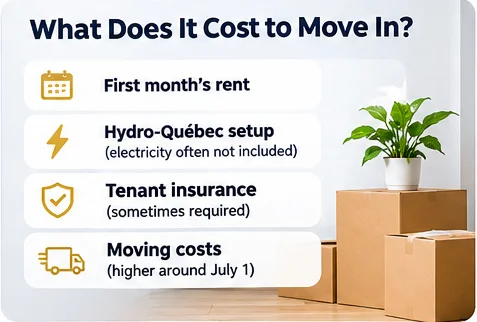
- First month's rent
- Hydro-Québec account setup (electricity is often not included, and many older units use electric heat)
- Tenant insurance, which some landlords require (see our tenant insurance guide)
- Moving costs, which spike around July 1
Ask whether heat and hot water are included. In older triplexes with electric baseboards, winter hydro bills can make a cheaper rent look less cheap.
FAQ
What is the average rent in Montreal in 2026?
An unfurnished one-bedroom averaged about $1,605 a month in August 2026, according to liv.rent's Montreal rent report. Two-bedroom purpose-built rentals average about $1,346 across Greater Montreal per CMHC data, since many long-term tenants pay below current asking rents.
Can a Montreal landlord ask for a deposit?
No. Quebec prohibits security, damage and key deposits, as well as last month's rent. The landlord can only require the first month's rent in advance.
Can I refuse a rent increase in Montreal?
Yes. You have one month after receiving the notice to refuse. You keep your right to stay, and the landlord must apply to the TAL if they still want the increase.
When is the best time to rent in Montreal?
Selection peaks in spring ahead of July 1 moving day. Fall and winter have fewer listings but less competition, which can mean better deals and more negotiating room.
Find your place with confidence
Rentdigi brings verified Montreal listings and live rent data together, so you can see what a fair price looks like by neighbourhood before you book a viewing.