


Rentdigi: Renting in Vancouver: 2026 Neighbourhood & Price Guide
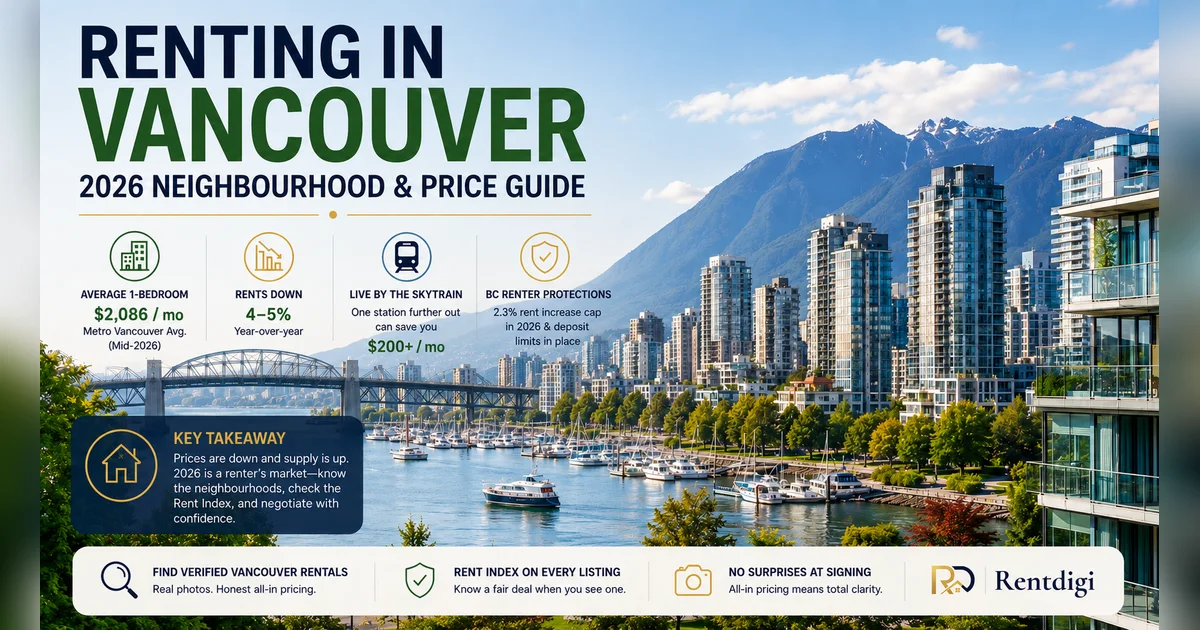
Table of Contents
- 1. What Rent Actually Costs in Vancouver in 2026
- 2. Vancouver Neighbourhoods Worth Knowing
- 3. BC Renter Protections Every Vancouver Tenant Should Know
- 4. How to Win in Vancouver's 2026 Market
- 5. FAQs: Renting in Vancouver
- 6. What is the average rent in Vancouver in 2026?
- 7. Is rent going down in Vancouver?
- 8. Where is the cheapest place to rent in Metro Vancouver?
- 9. How much can a landlord increase rent in BC?
- 10. How much is a security deposit in BC?
- 11. Find Your Place in Vancouver
Last updated: August 2026
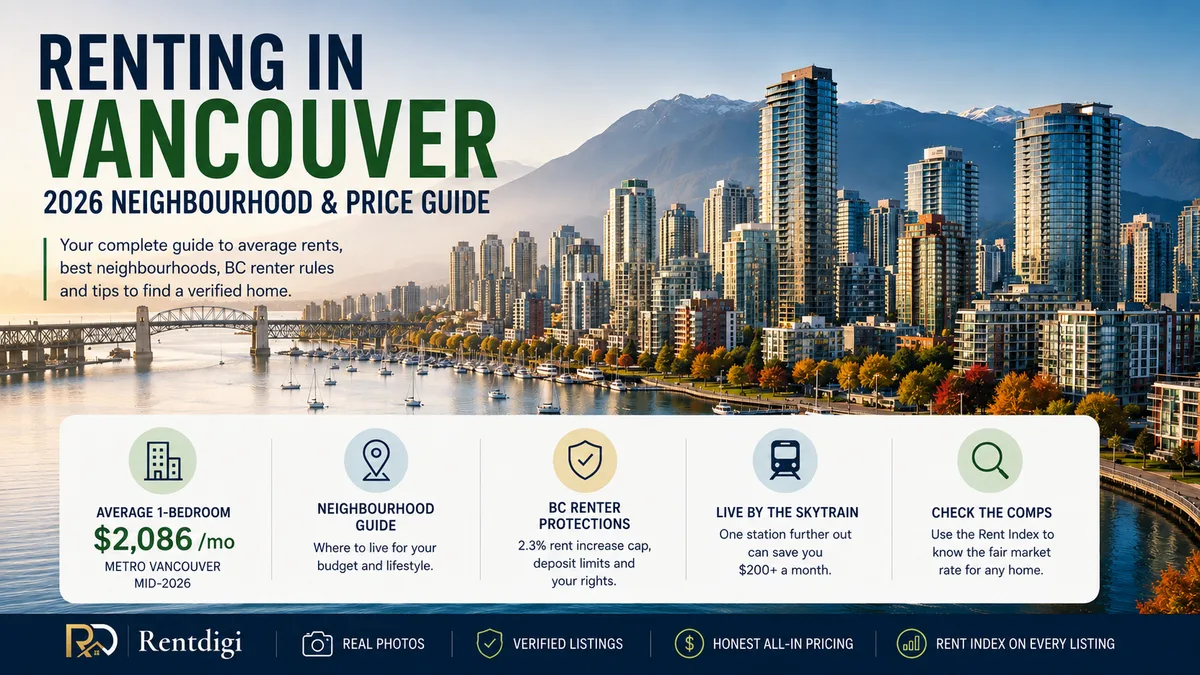
Vancouver's rental reputation precedes it: stunning, and staggeringly expensive. Both are true — but the 2026 story is more interesting. Metro Vancouver rents have now declined for several consecutive months, with the average unfurnished one-bedroom sitting around $2,086 per month — roughly $190 cheaper than a year ago. For the first time in years, renters here have leverage. Here's how to use it.
What Rent Actually Costs in Vancouver in 2026
Across Metro Vancouver as of mid-2026, expect roughly:
| Unit type | Typical monthly range (2026) | What the range depends on |
|---|---|---|
| Studio | $1,600 – $1,900 | Older stock and the West End sit at the low end |
| 1 bedroom | $1,900 – $2,500 | Metro average ~$2,086; City of Vancouver and North Van at the top |
| 2 bedroom | $2,500 – $3,300 | New SkyTrain towers push the upper end |
Location swings these numbers dramatically. North Vancouver remains the single most expensive rental market in the country, with an all-property average above $3,000, and Richmond and Burnaby are not far behind — while pockets of Surrey rent one-bedrooms in the $1,400s.
Measured per square foot the gap is starker still: around $4/sq ft in the City of Vancouver versus about $2/sq ft in Surrey. Same region, double the space for your money.
Vancouver Neighbourhoods Worth Knowing
Downtown, Yaletown & Coal Harbour — Tower living, seawall at your door, walk-to-work convenience. You pay the city's top rates for it.
The West End — Older low-rises between downtown and the beaches. One of central Vancouver's best value plays, with character buildings that often undercut the glass towers a few blocks away.
Mount Pleasant & Main Street — Breweries, indie shops, and the city's creative energy. Popular with young professionals; priced just under downtown.
Kitsilano — Beach-town feel, heritage houses split into suites. Lifestyle-first renters love it; expect to compete for the good ones.
East Van & Commercial Drive — Character, community, and food from every corner of the world, at friendlier prices than the west side.
Burnaby (Metrotown & Brentwood) — New SkyTrain towers with amenities central Vancouver can't match at the price. The default choice for renters who want new construction.
New Westminster — The quiet value pick: heritage charm, river views, and a SkyTrain ride to downtown, typically hundreds below Vancouver proper.
Surrey & Langley — Metro's affordability zone. Newton one-bedrooms have averaged under $1,500 this year — barely half the North Shore's rates — with rapid transit expanding.
BC Renter Protections Every Vancouver Tenant Should Know
BC gives renters more guardrails than most provinces, and knowing them saves real money.
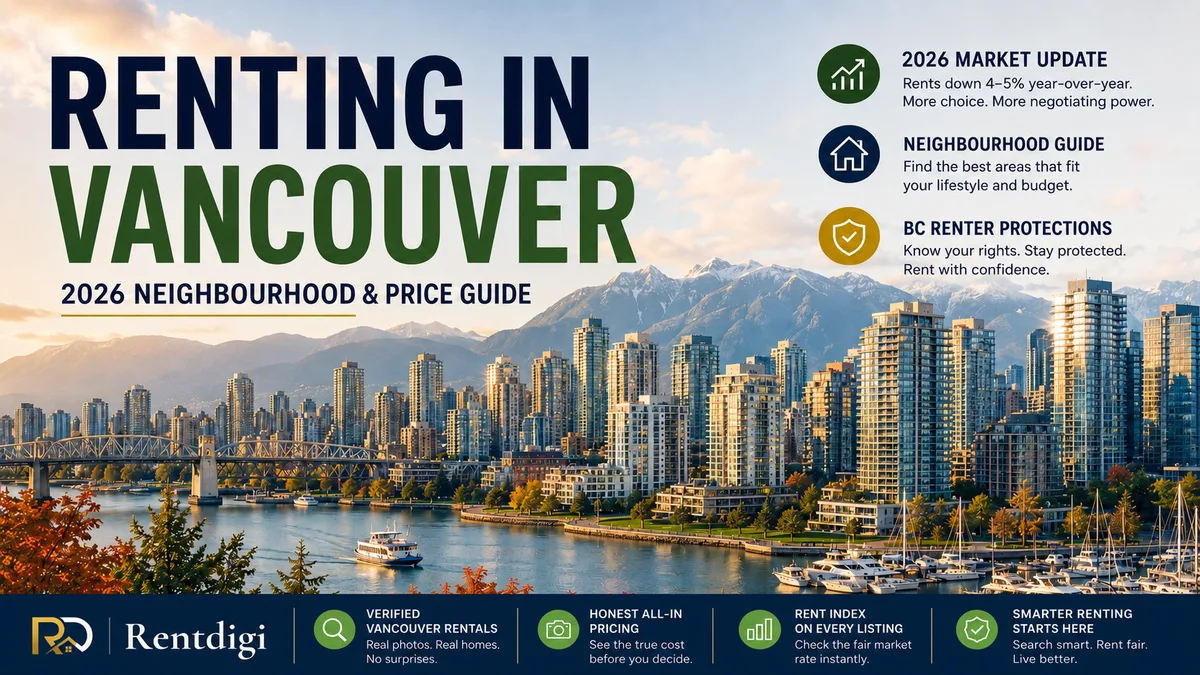
- Rent increases are capped. For existing tenants the 2026 maximum allowable increase is 2.3%, once per 12 months with proper notice. There is no cap between tenancies.
- Security deposits are limited to half a month's rent, plus up to half a month again as a pet damage deposit. Anyone demanding more is either mistaken or scamming you — if something feels off, here's how to spot a fake listing.
- Disputes go to the Residential Tenancy Branch, which is free to use.
How to Win in Vancouver's 2026 Market
With prices soft and supply up, this is a negotiator's market.
Check any listing against the fair market rate before you inquire — the Rent Index shows you the comps, so you'll know a genuine deal (or an overpriced hopeful) on sight.
Anchor your search to a SkyTrain line rather than a single neighbourhood; one station further out routinely saves $200+ a month.
Have your application package ready to send the day the right home appears.
And compare all-in costs, not sticker rents — parking alone can run $100–$250 a month downtown, and every Rentdigi listing shows honest all-in pricing so nothing ambushes you at lease signing.
Renting elsewhere in Canada? The Toronto renter's guide covers Ontario's very different rules and price ladder.
FAQs: Renting in Vancouver
What is the average rent in Vancouver in 2026?
Around $2,086 per month for an unfurnished one-bedroom across Metro Vancouver as of mid-2026, with the City of Vancouver and North Shore higher and Surrey and Langley significantly lower. Prices are down roughly 4–5% year-over-year.
Is rent going down in Vancouver?
Yes. Metro Vancouver rents have declined for multiple consecutive months in 2026, and sit close to $190 below last year's one-bedroom average, giving renters more choice and negotiating power.
Where is the cheapest place to rent in Metro Vancouver?
Surrey — especially Newton, with one-bedrooms in the $1,400s — along with Langley and Abbotsford in the Fraser Valley. New Westminster is the best value on the SkyTrain itself.
How much can a landlord increase rent in BC?
For existing tenants the 2026 maximum allowable increase is 2.3%, once per 12 months with proper notice. There is no cap between tenancies.
How much is a security deposit in BC?
A maximum of half a month's rent, plus up to half a month as a pet damage deposit. Requests beyond that are a red flag.
Find Your Place in Vancouver
Search verified Vancouver rentals on Rentdigi — real photos, honest all-in pricing, and the Rent Index on every listing so you know a fair deal when you see one.