


Rentdigi: How Much Can a Landlord Charge for a Deposit in Canada?
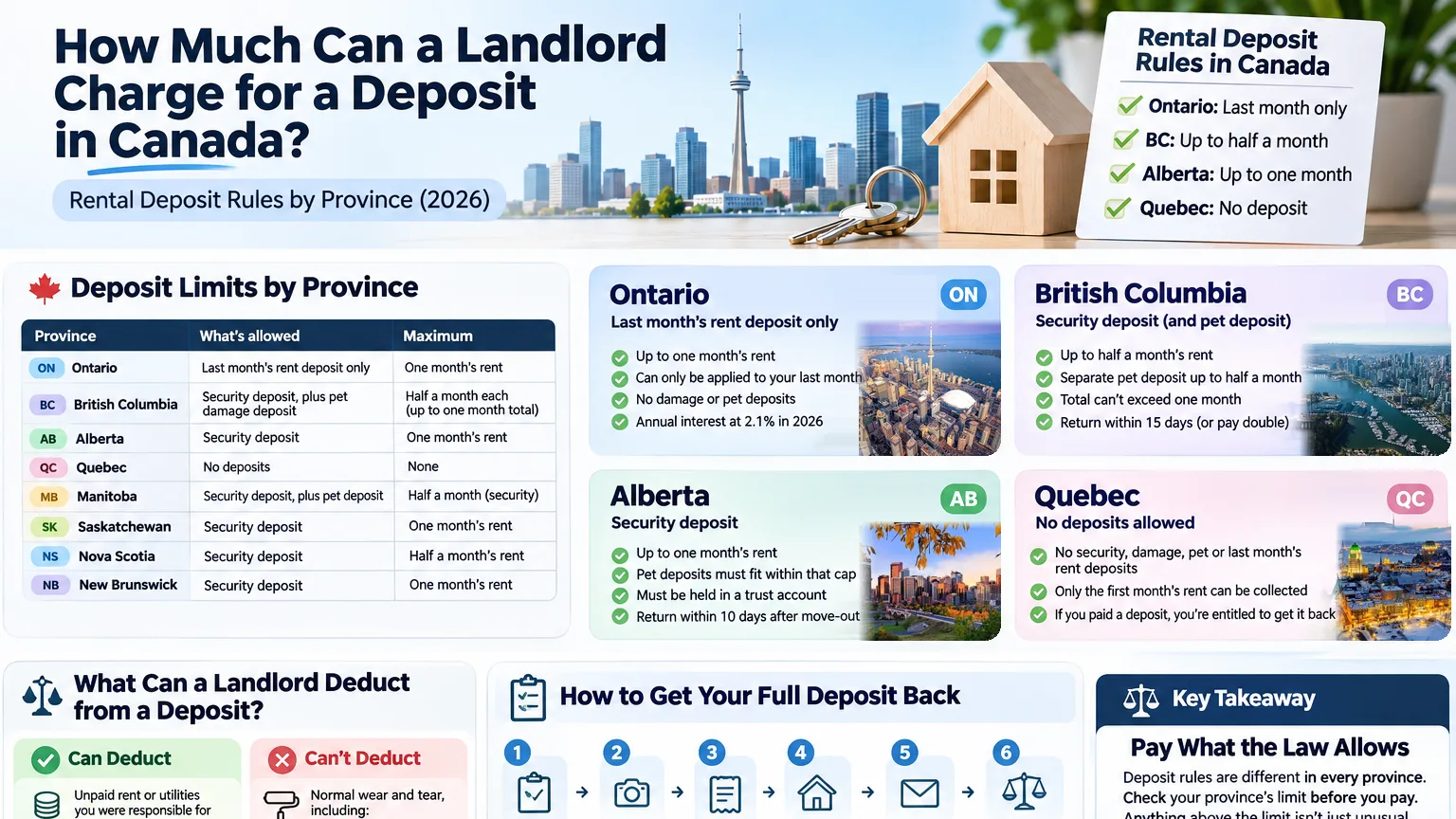
Table of Contents
- 1. What are the deposit limits in each province?
- 2. How do deposits work in Ontario?
- 3. How do deposits work in British Columbia?
- 4. How do deposits work in Alberta?
- 5. Can a landlord in Quebec ask for a deposit?
- 6. What can a landlord deduct from a deposit?
- 7. How do I get my full deposit back?
- 8. FAQ
- 9. Is a security deposit legal in Ontario?
- 10. How long does a landlord have to return a deposit?
- 11. Can a landlord charge first and last month's rent plus a damage deposit?
- 12. Does a landlord have to pay interest on my deposit?
- 13. Pay what the law allows
How much a landlord can ask for upfront depends on your province. Ontario only allows a last month's rent deposit. British Columbia caps security deposits at half a month's rent, plus a separate half-month pet deposit. Alberta allows up to one month's rent. Quebec doesn't allow any deposit at all. Anything above those limits isn't just unusual, it's not legal.
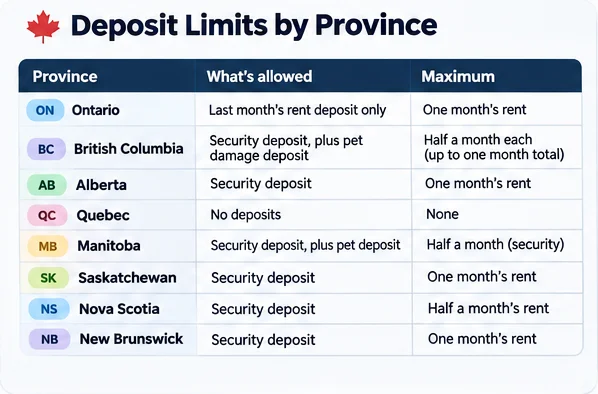
What are the deposit limits in each province?
| Province | What's allowed | Maximum |
|---|---|---|
| Ontario | Last month's rent deposit only | One month's rent |
| British Columbia | Security deposit, plus pet damage deposit | Half a month each |
| Alberta | Security deposit | One month's rent |
| Quebec | No deposits | None |
| Manitoba | Security deposit, plus pet deposit | Half a month (security) |
| Saskatchewan | Security deposit | One month's rent |
| Nova Scotia | Security deposit | Half a month's rent |
| New Brunswick | Security deposit | One month's rent |
Rules change, and smaller provinces and territories each have their own details, so confirm with your provincial tenancy office before you pay.
How do deposits work in Ontario?
Ontario is different from almost everywhere else. Under the Residential Tenancies Act, a landlord can collect a rent deposit of no more than one month's rent, and it can only be applied to your last month. It can't be used to cover damage.
Damage deposits, pet deposits and key deposits beyond a refundable amount for the key's replacement cost are not allowed. If a landlord wants to claim for damage later, they have to go through the Landlord and Tenant Board rather than keeping your deposit.
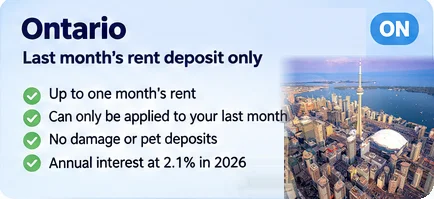
Landlords must also pay interest on the last month's rent deposit each year at the rent increase guideline rate, which is 2.1% in 2026. In practice, that interest is often used to top up the deposit so it matches your new rent after an increase.
For more on what's normal in an Ontario application, see our guide to Toronto renting.
How do deposits work in British Columbia?
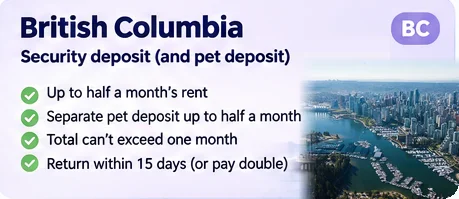
A BC landlord can collect a security deposit of up to half a month's rent, based on the rent at the start of the tenancy. If pets are allowed, they can take a separate pet damage deposit of up to another half month. Together, the two can't exceed one month's rent. A last month's rent deposit isn't permitted.
The landlord must return the deposit, with any interest owed, within 15 days of the later of the tenancy ending or receiving your forwarding address in writing. If they miss that deadline without your written agreement or a dispute filing, they can be ordered to pay double.
How do deposits work in Alberta?
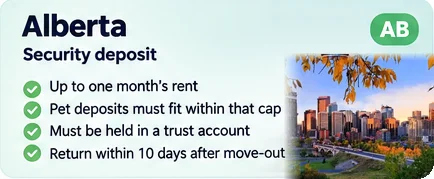
Alberta allows a security deposit of up to one month's rent, and pet deposits must fit within that same cap. The landlord has to hold the deposit in a trust account and pay interest when it's returned.
One common misunderstanding: in Alberta, the security deposit is not your last month's rent. You still owe the final month unless you and your landlord agree otherwise in writing.
The landlord has 10 days after you move out to either return the full deposit or give you a statement of deductions along with whatever balance is left.
Can a landlord in Quebec ask for a deposit?
No. Quebec doesn't allow security deposits, damage deposits, key deposits or last month's rent. A landlord can ask for the first month's rent in advance and nothing more. If you've paid a deposit in Quebec, you're entitled to get it back.
 See our Montreal renting guide for the other rules that apply there.
What can a landlord deduct from a deposit?
In provinces that allow security deposits, landlords can typically deduct for:
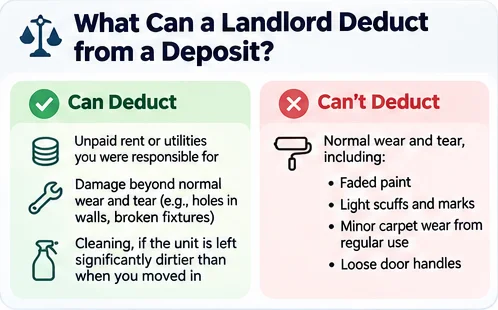
- Unpaid rent or utilities you were responsible for
- Damage beyond normal wear and tear, such as holes in walls or broken fixtures
- Cleaning, if the unit is left significantly dirtier than when you moved in
What they can't deduct: normal wear and tear. Faded paint, light scuffs, minor carpet wear from regular use and loose door handles are part of living somewhere.
How do I get my full deposit back?
Most deposit disputes are won or lost on move-in day.
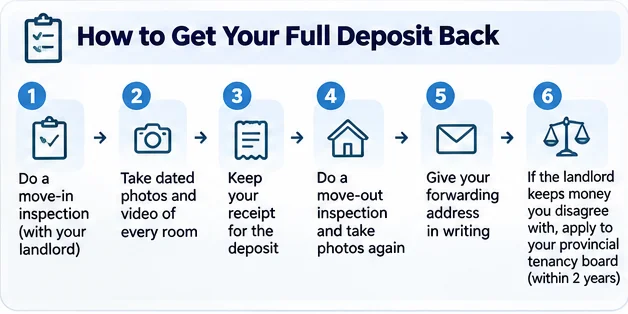
- Do a move-in inspection with your landlord. BC and Alberta require one. Even where it isn't required, ask for it.
- Take dated photos and video of every room, including floors, walls, appliances and inside cupboards.
- Keep your receipt for the deposit.
- Do a move-out inspection and photograph the unit again after cleaning.
- Give your forwarding address in writing.
- If the landlord keeps money you disagree with, apply to your provincial tenancy board. Most have a two-year limitation period.
FAQ
Is a security deposit legal in Ontario?
No. Ontario landlords can only collect a last month's rent deposit of up to one month's rent, and it can only be applied to your final month. Damage and pet deposits aren't allowed.
How long does a landlord have to return a deposit?
It depends on the province. BC landlords have 15 days after the tenancy ends and they receive your forwarding address. Alberta landlords have 10 days to return the deposit or provide a statement of deductions.
Can a landlord charge first and last month's rent plus a damage deposit?
Not in Ontario, where a damage deposit is illegal on top of last month's rent. In BC, a last month's rent deposit isn't allowed. A request for all three is a strong warning sign, and sometimes a sign of a rental scam.
Does a landlord have to pay interest on my deposit?
Ontario requires annual interest at the guideline rate on last month's rent deposits. BC and Alberta also require interest, though the rates are set by each province and can be very low.
Pay what the law allows
Before you hand over any money, check the amount against your province's limit. If it's higher, ask the landlord to explain. On Rentdigi, listings show deposit terms upfront, so there are fewer surprises at signing. Our guide to documents landlords ask for covers the rest of what's normal.