


Rentdigi: Is Your Rent Fair? How the Rentdigi Rent Index Works
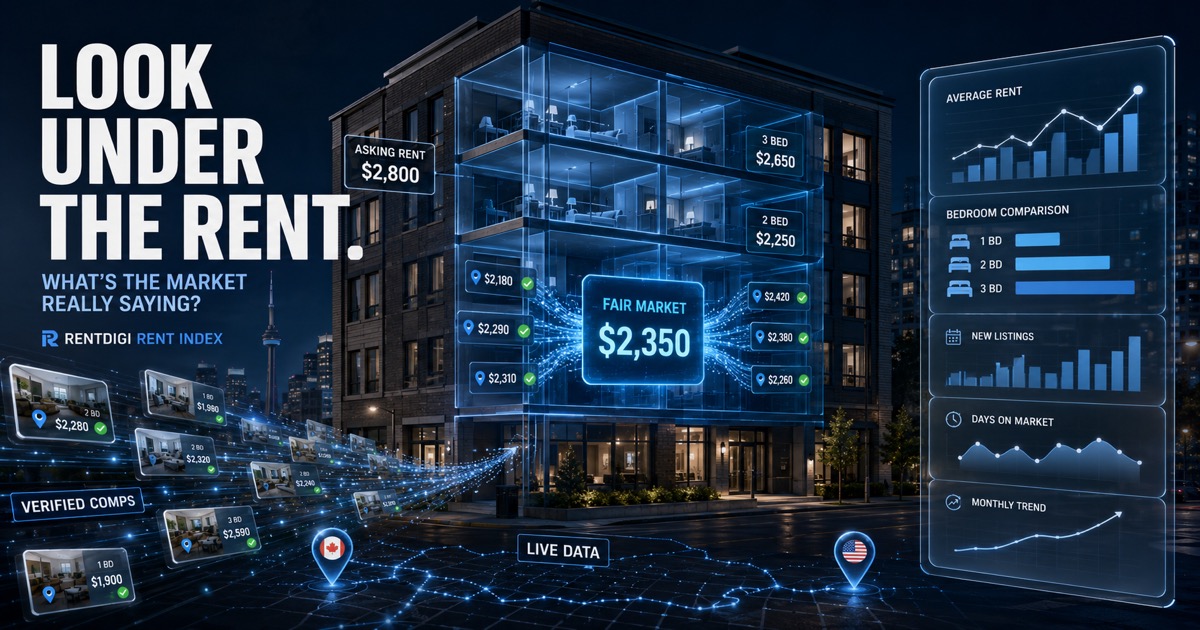
Table of Contents
Every renter has asked it. Standing in a viewing, scrolling a listing at midnight, signing a renewal: is this rent actually fair?
The honest answer used to be "nobody really knows" — city averages in the news are months old, and the unit next door might be listed at a completely different price. The Rentdigi Rent Index exists to close that gap.
What the Rent Index Is
The Rent Index is a live benchmark of asking rents, built from verified listings on Rentdigi across Canadian and US markets.
For each city it rolls up into a market snapshot: median and average rent, averages by bedroom count, how the rents on offer are distributed, how many listings are live right now, and how all of that compares to a year ago. Instead of a stale headline number, you see what the market is doing right now, in the place you're actually searching.
How It Works
Three things make the index meaningful rather than just another statistic.
It's built on verified listings. Ghost listings, bait-and-switch prices, and scam posts poison rent data everywhere else. Because every Rentdigi listing is verified — here's how verification works — the index reflects homes that genuinely exist at prices landlords genuinely intend to charge.
It compares like with like. A downtown studio and a four-bedroom house shouldn't share a benchmark. The index works off comparables — homes with a similar bedroom count, type, and area — so the "fair rate" you see is relevant to the actual home you're looking at.
It's live. The index updates as listings go up and get rented, which means it catches turns in the market — a cooling neighbourhood, a spring rush — long before annual reports do.
What It Means for Renters
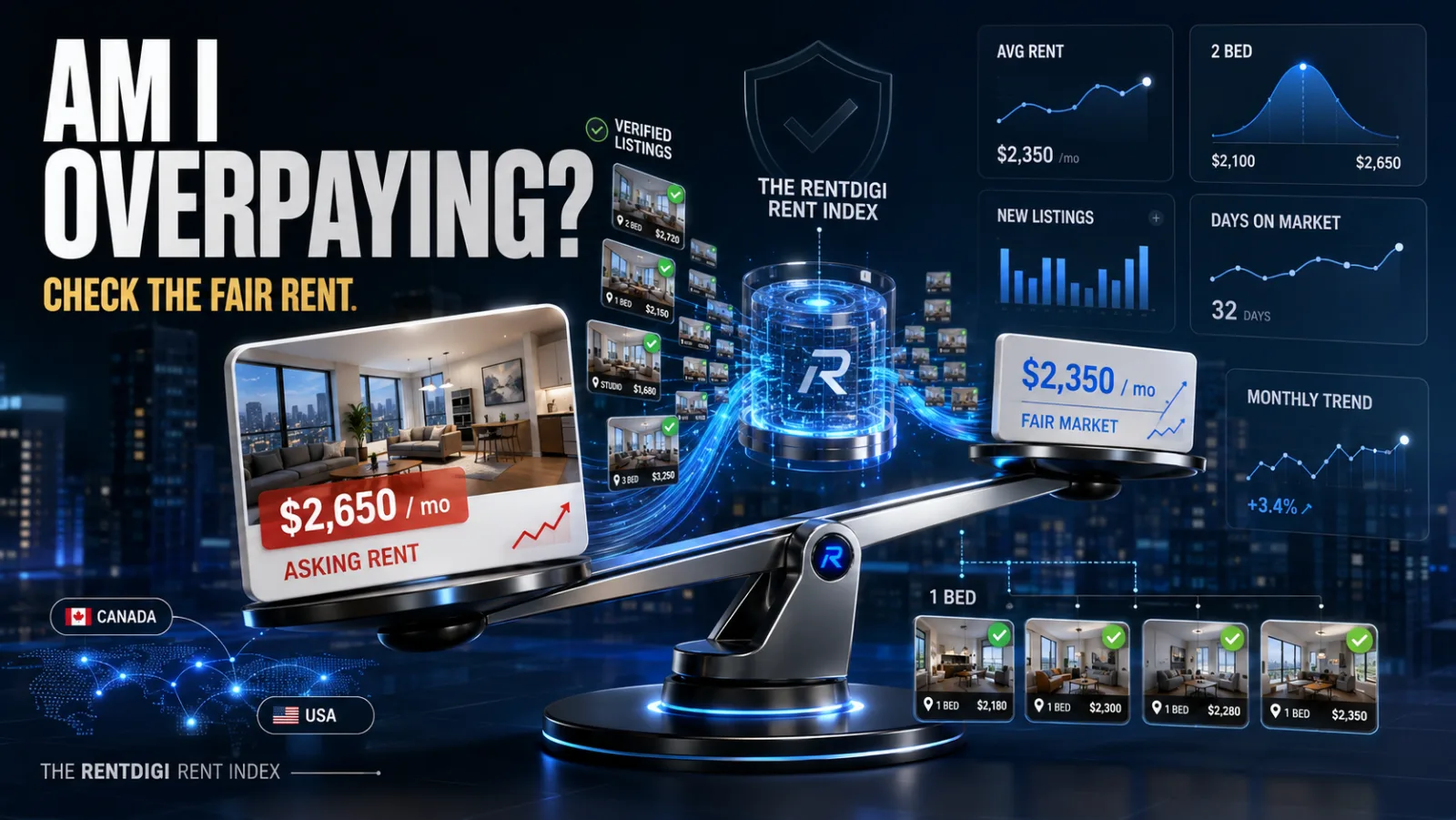
Next to a listing, the Rent Index answers the only question that matters: is this price above, at, or below the fair market rate for homes like it?
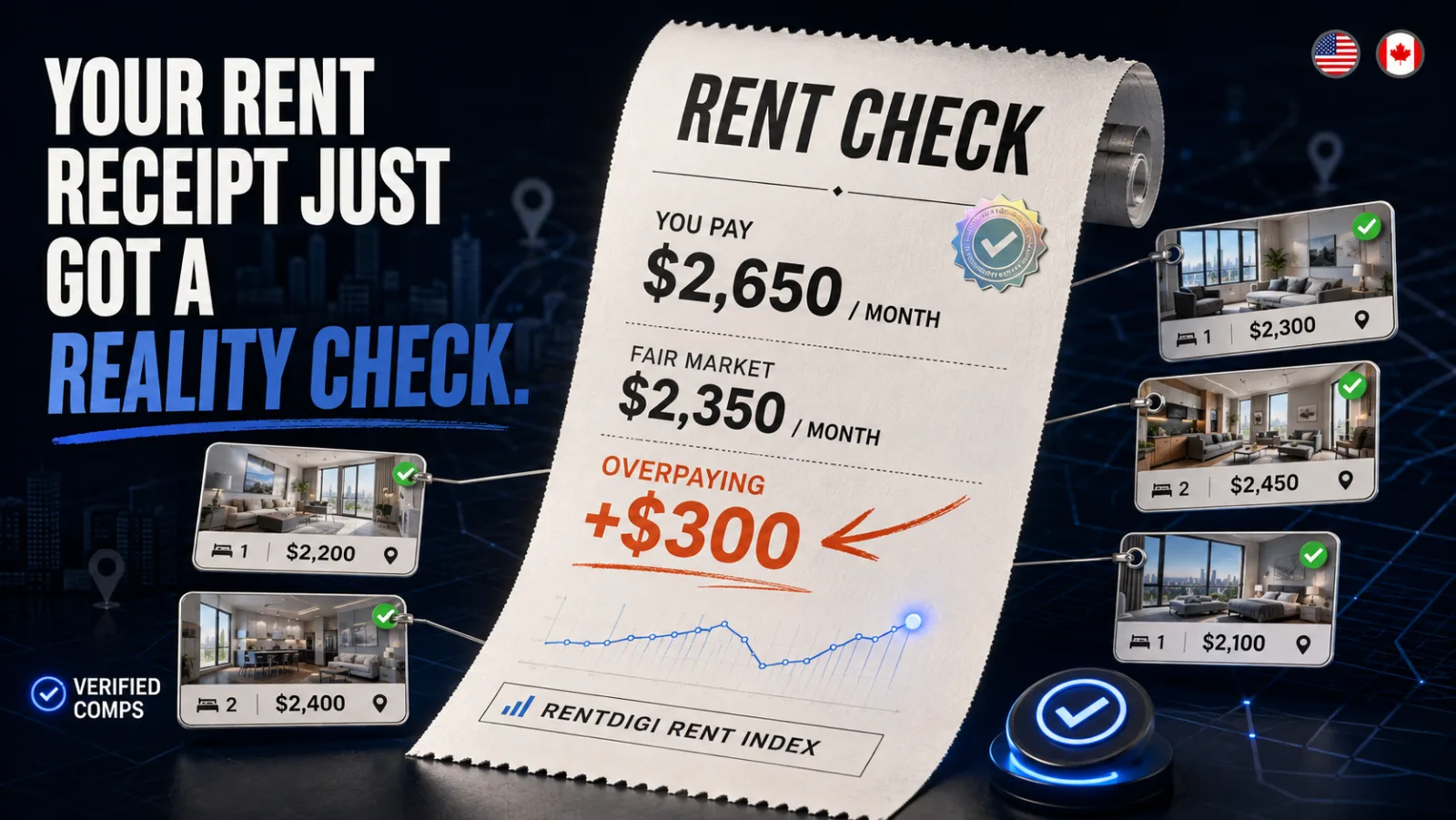
That changes how you search. You can spot a genuinely good deal in the first 24 hours, when acting fast matters most. You can skip the overpriced ones without a second thought. And when you do inquire, you negotiate from data instead of vibes. It also keeps everyone honest: a landlord pricing far above comparable homes has some explaining to do.
What It Means for Landlords
Pricing a rental is a goldilocks problem. Too high and the unit sits empty burning a month of income; too low and you leave money on the table every month for a year.
The Rent Index — and the AI pricing built on top of it — suggests a rate grounded in what comparable homes nearby are actually asking. The result is fewer vacant days and fewer awkward price drops after two quiet weeks.
What a Rent Index Can — and Can't — Tell You
A little honesty, because trust is the whole point.
The index measures asking rents on the open market, which typically run ahead of what long-term tenants pay on older leases. If you've rented the same place for years, don't panic if the index sits above your rent.
And no benchmark knows your specific unit's condition, view, or that perfect landlord who fixes things in a day. Treat the index as your starting point for a fair conversation, not the final word. If you're arriving from another country, the cross-border renting checklist covers the rest of what changes at the border.
See What Fair Looks Like
Fair pricing shouldn't be a mystery — for either side of the lease. That's the market Rentdigi is building.
See the market snapshot for your city and check any listing against the Rent Index before you inquire. Landlords: list your property free and let AI price it right from day one.