


Rentdigi: Moving Between Canada & the US: Cross-Border Renting Checklist
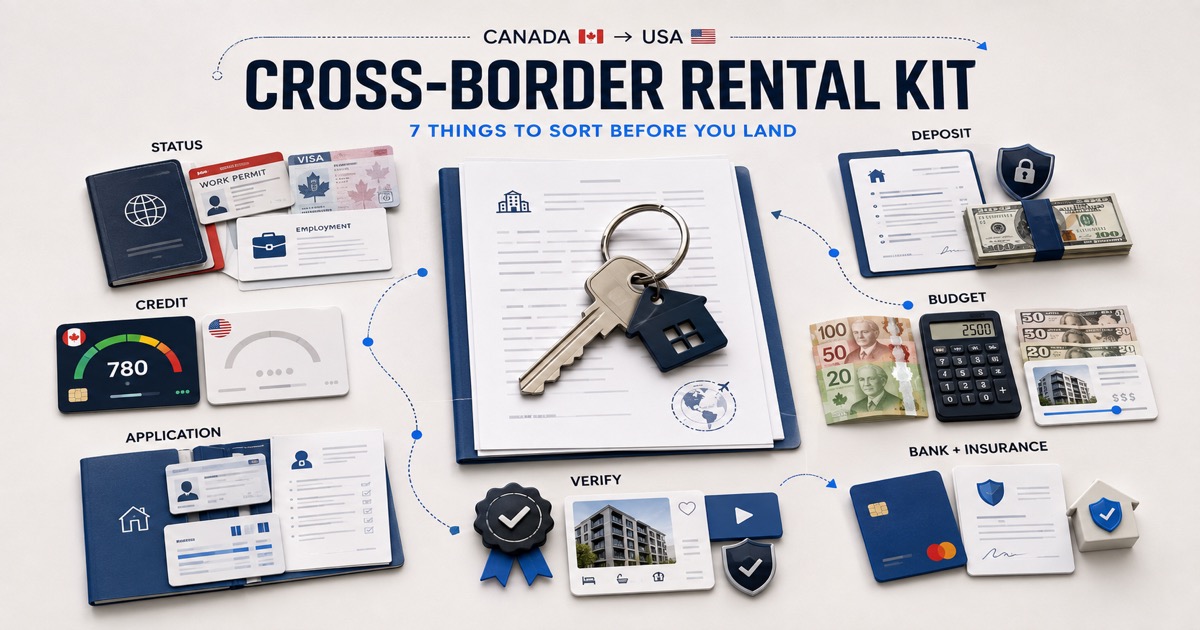
Table of Contents
- 1. 1. Sort Your Status Documents First
- 2. 2. Know This: Your Credit Doesn't Cross the Border
- 3. 3. Build One Clean Application Package
- 4. 4. Deposit and Lease Rules Change at the Border
- 5. 5. Budget in the Right Currency — and the Right "All-In" Number
- 6. 6. Never Send Money to a Listing You Can't Verify
- 7. 7. Set Up Banking, Insurance, and the Boring Stuff Early
- 8. Start Before You Pack
Every year, thousands of people move between Canada and the US for work, school, or family — and almost all of them hit the same surprise: renting in the other country is a different game.
The good news? With the right paperwork and a few weeks of lead time, you can have a lease signed before your flight lands. Here's your checklist.
1. Sort Your Status Documents First
Landlords on both sides of the border will ask what allows you to live and work there. Have your work permit, visa (TN, H-1B, study permit, PR card — whatever applies), and your signed job offer or admission letter scanned and ready.
A clear offer letter with your salary often does more work than anything else in your application.
2. Know This: Your Credit Doesn't Cross the Border
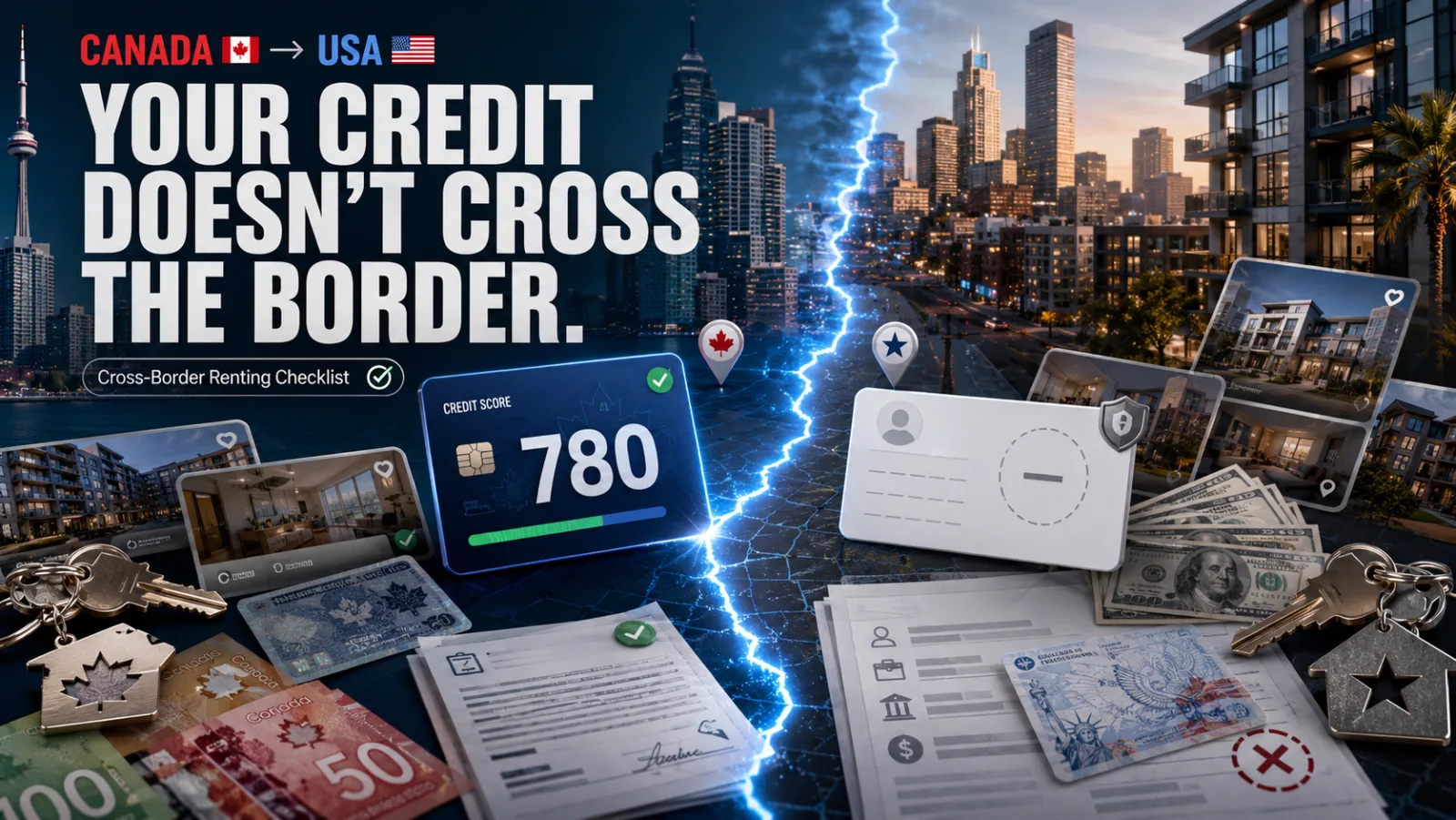
This is the single biggest shock for cross-border renters. Equifax and TransUnion operate separately in each country — your 780 score in Toronto means nothing to a screening report pulled in Texas, and vice versa.
Plan around it. Any of these can stand in for local credit:
- Strong proof of income — a signed offer letter or three recent pay stubs.
- A reference letter from your previous landlord, ideally naming your tenancy dates and payment history.
- Bank statements showing savings, which reassure a landlord who can't pull a score.
- A co-signer or guarantor with local credit.
Some landlords may ask for extra deposit or prepaid rent where local law allows it.
3. Build One Clean Application Package
Whichever direction you're moving, assemble a single folder before you start inquiring: government ID, status documents, job offer or recent pay stubs, previous landlord references, and a short introduction about who you are and when you're arriving.
Cross-border applicants who send a complete package in the first message routinely beat local applicants who "will send it later." Our guide to finding your perfect rental covers how to make that first message land.
4. Deposit and Lease Rules Change at the Border
Don't assume the rules you know travel with you. In Ontario, for example, landlords generally can't collect a damage deposit — only a rent deposit — while many US states allow security deposits of one month or more, with limits varying state by state.
Alberta, BC, New York, California: each has its own rules on deposits, notice periods, and rent increases. Before signing, spend ten minutes reading the tenancy rules for your specific destination province or state.
5. Budget in the Right Currency — and the Right "All-In" Number
A $2,000 rent means very different things in CAD and USD, and utility norms differ too. Heat is often included in older Canadian buildings; it rarely is in US Sun Belt rentals.
Compare listings on their true all-in monthly cost — rent, utilities, parking, insurance — in one currency, at today's exchange rate. Rentdigi listings show honest, all-in pricing with the currency clearly marked, and the Rent Index shows what a given market actually asks, which makes cross-border comparisons much less painful.
6. Never Send Money to a Listing You Can't Verify
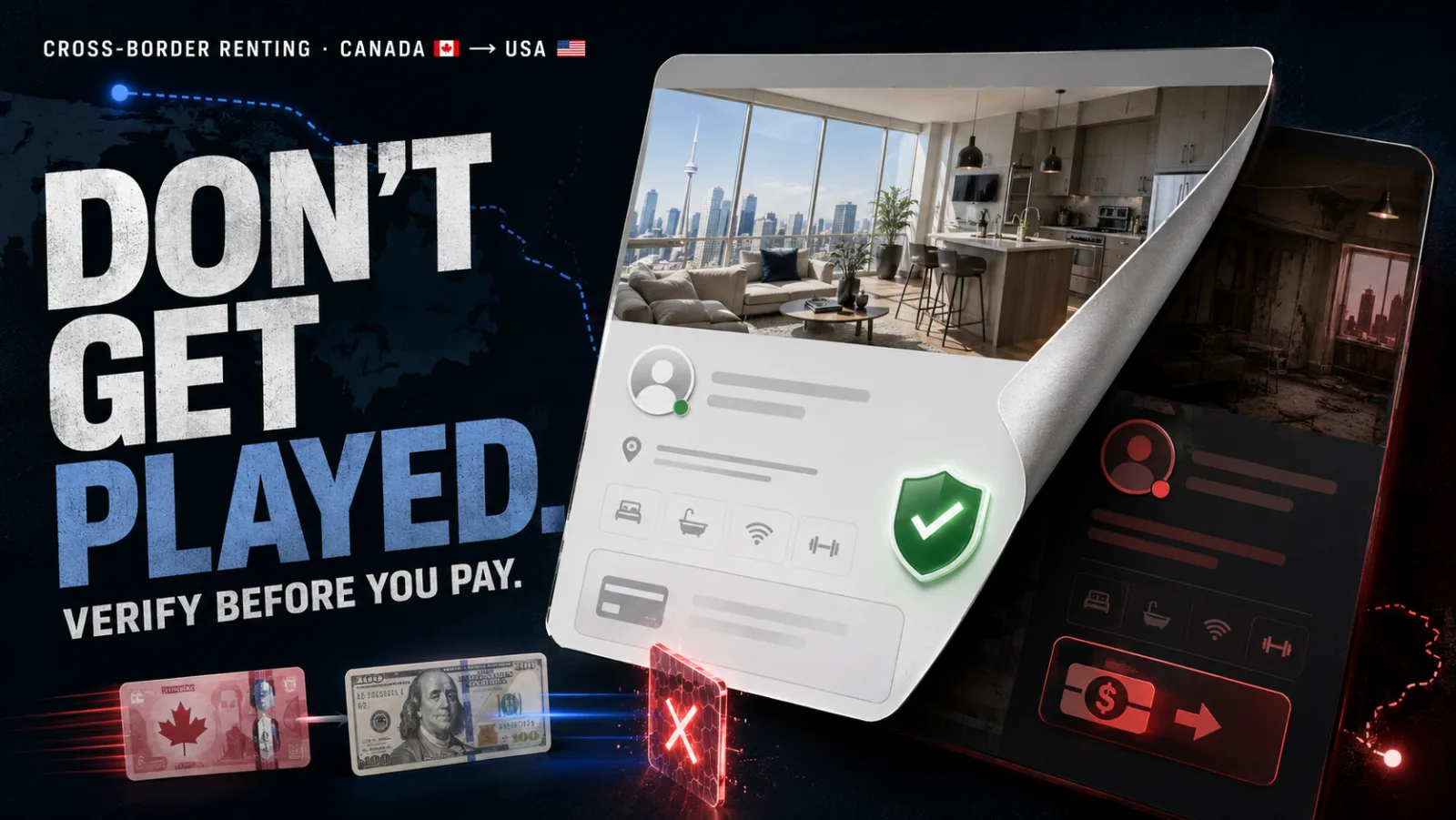
Long-distance renters are the number one target for rental scams — fake listings, "the landlord is overseas," pressure to e-transfer a deposit sight unseen.
The rules:
- Never pay before a lease. No deposit, no holding fee, no "application guarantee."
- Always get a video tour if you can't visit in person, ideally live rather than pre-recorded.
- Only deal with verified landlords. On Rentdigi, every listing and landlord is verified — here's how verification works — so renting from another country doesn't mean renting on blind faith.
7. Set Up Banking, Insurance, and the Boring Stuff Early
Open a bank account in your destination country as soon as you can — most major banks have newcomer or cross-border programs — since first month's rent usually needs to come from a local account.
Line up tenant insurance for day one, because many leases require it, and keep your old country's account open through the transition.
Start Before You Pack
Moving countries is hard enough. Renting across the border doesn't have to be — prepare the paperwork, verify everything, and let the right home find you.
Moving between Canada and the US? Search verified rentals across Canada and the US on Rentdigi — real photos, honest all-in pricing, and verified landlords you can trust from anywhere. Start your search before you pack a single box.